
Title Attorney vs Real Estate Litigation Attorney: What’s the Difference?
Real estate transactions and disputes involve multiple legal professionals with different roles. Two terms that often cause confusion are title attorney and real estate litigation attorney. While both practice within the broader field of real estate law, their responsibilities and focus areas are very different.
Understanding the distinction can help property buyers, sellers, investors, and business owners choose the right legal guidance when issues arise.
Understanding the Role of a Title Attorney
A title attorney primarily focuses on real estate transactions and the legal aspects of transferring property ownership. Their work typically occurs during the purchase or sale of property and is centered on ensuring that the title to the property is valid and can be transferred without legal complications.
Title attorneys often work closely with:
Title companies
Real estate agents
Mortgage lenders
Buyers and sellers
Their goal is to make sure the transaction can close smoothly and that the buyer receives clear title to the property.
What a Title Attorney Typically Does
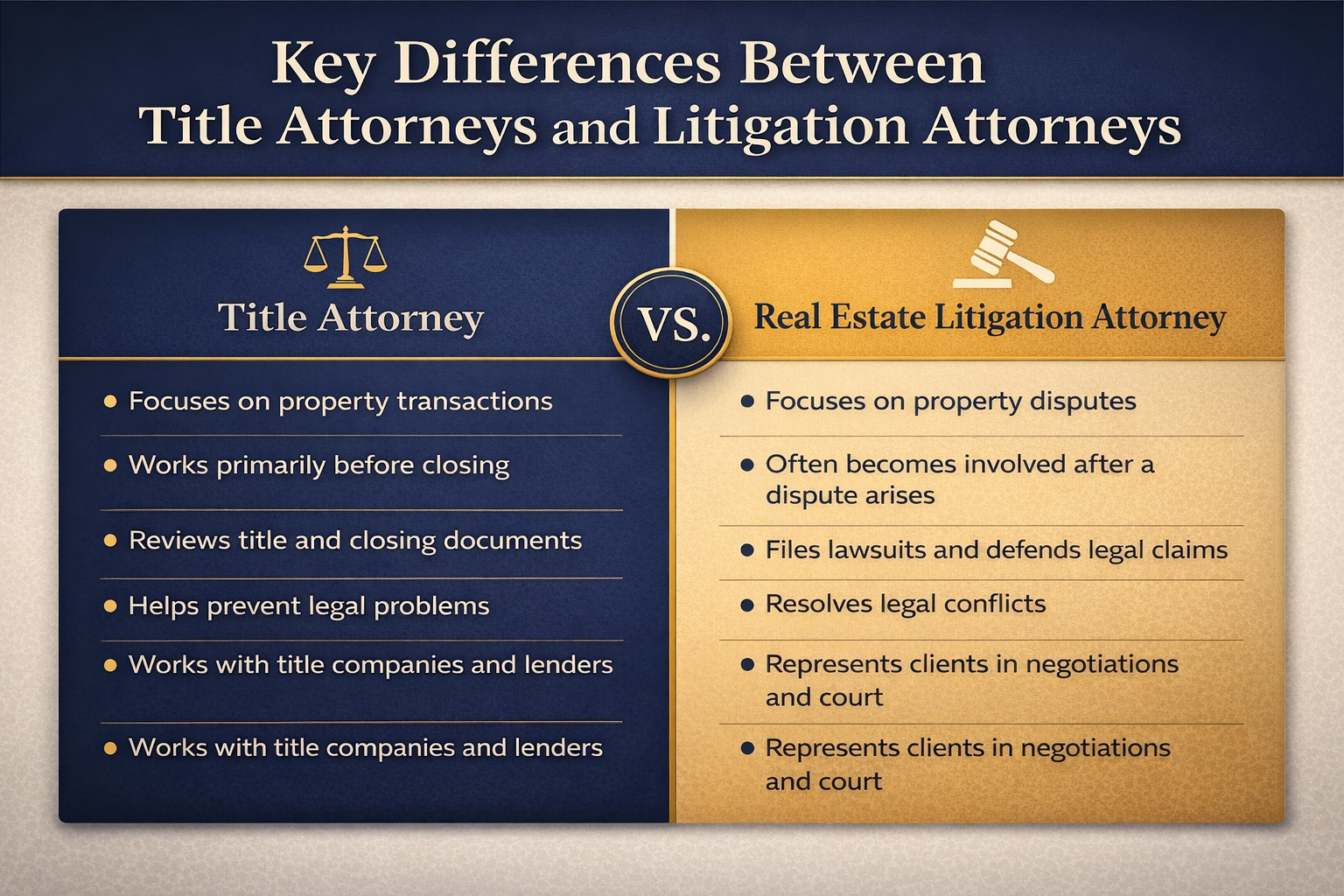
Title attorneys commonly handle tasks such as:
Reviewing title searches and property records
Identifying liens or encumbrances
Addressing title defects
Preparing closing documents
Coordinating with lenders and title companies
Overseeing or participating in real estate closings
Title attorneys focus on preventing problems before they occur by identifying legal issues that could affect ownership rights.
For example, if a property has an unresolved lien or an error in the legal description, the title attorney works to resolve the issue before closing.
What Is a Real Estate Litigation Attorney?
A real estate litigation attorney focuses on disputes involving property, contracts, or real estate transactions. Instead of facilitating closings, litigation attorneys represent clients when conflicts arise.
These disputes may involve:
Breach of real estate contracts
Title disputes
Earnest money conflicts
Fraud or misrepresentation
Seller refusal to close
Landlord-tenant disputes
Easement or access issues
Litigation attorneys handle negotiation, mediation, and court proceedings when necessary.
When a real estate matter escalates into a legal dispute, a litigation attorney becomes essential.
When You May Need a Title Attorney
A title attorney is typically involved in the early stages of a real estate transaction. Situations where their services are commonly used include:
Purchasing a Home
When buying a property, a title attorney reviews the title search to confirm the seller has the legal right to transfer ownership.
Selling Property
Sellers often rely on title attorneys to ensure documentation is prepared correctly and to address any issues that could delay closing.
Refinancing
Mortgage lenders frequently require title review before approving refinancing.
Clearing Title Defects
If issues such as unpaid liens or recording errors appear, a title attorney works to resolve them before the property is transferred.
The role of the title attorney is largely transactional and preventative.
When You May Need a Real Estate Litigation Attorney
A real estate litigation attorney becomes necessary when legal disputes arise or when negotiations break down.
Common scenarios include:
Breach of Real Estate Contract
One of the most frequent disputes occurs when a buyer or seller fails to honor a purchase agreement. For example:
A seller refuses to close after receiving a higher offer
A buyer attempts to cancel without valid contractual grounds
In these cases, a litigation attorney may pursue remedies such as specific performance or damages.
Boundary Line Disputes
Neighbors may disagree about the exact location of a property line. These disputes can involve:
Fence placement
Encroachments
Survey conflicts
A litigation attorney may review property records, negotiate resolutions, or file legal action if necessary.
Title Disputes
Sometimes title problems cannot be resolved through routine corrections. Litigation may be required to determine rightful ownership through a quiet title action.
Adverse Possession Claims
Adverse possession occurs when someone claims ownership of land through long-term use under certain legal conditions. These disputes often require detailed factual analysis and legal proceedings.
Commercial Real Estate Conflicts
Businesses may face disputes involving:
Commercial lease agreements
Development contracts
Partnership disagreements
Property ownership claims
Litigation attorneys help protect financial and contractual interests in these matters.
Why the Distinction Matters
Many people assume any real estate lawyer can handle every aspect of property law. While attorneys may have overlapping knowledge, their primary areas of focus can differ.
Choosing the right type of attorney matters because:
Transactions require document precision and title expertise
Litigation requires courtroom strategy and dispute resolution skills
In some cases, both professionals may be involved at different stages of the same matter.
For example:
A title attorney handles a property closing.
A dispute arises months later regarding ownership or contract terms.
A litigation attorney becomes involved to resolve the conflict.
Understanding these roles ensures you seek the appropriate legal assistance when problems arise.
The Role of Preventative Legal Guidance
While litigation attorneys focus on disputes, many conflicts can be prevented with proper legal review early in the transaction process.
Careful contract drafting, thorough title examination, and clear documentation reduce the likelihood of later disputes.
Preventative legal guidance can:
Clarify contractual obligations
Identify title defects early
Reduce misunderstandings between parties
Protect ownership rights
However, even with careful preparation, disputes sometimes occur — particularly in fast-moving real estate markets.
Real Estate Disputes in Growing Markets
Rapidly growing cities often experience an increase in real estate disputes due to:
Rising property values
Competitive purchase offers
Accelerated development
Increased investment activity
As markets expand, conflicts involving contracts, boundaries, and title issues can become more common.
When disputes arise, experienced legal representation can help property owners protect their investments and enforce their rights.
How Wills Law PLLC Can Help
At Wills Law PLLC, we represent clients in real estate disputes and litigation matters involving residential and commercial property. Our firm focuses on protecting property rights, enforcing contracts, and resolving complex real estate conflicts.
We assist clients with matters including:
Breach of real estate contracts
Seller refusal to close
Boundary disputes
Title disputes and quiet title actions
Easement conflicts
Adverse possession claims
Commercial real estate litigation
Real estate disputes can quickly become complicated. Early legal guidance can help you understand your rights and evaluate the best strategy moving forward.
If you are dealing with a property dispute or believe your real estate rights have been violated, contact us today help you protect your investment and pursue an effective resolution.