
Adverse Possession in Tennessee: What You Need to Know
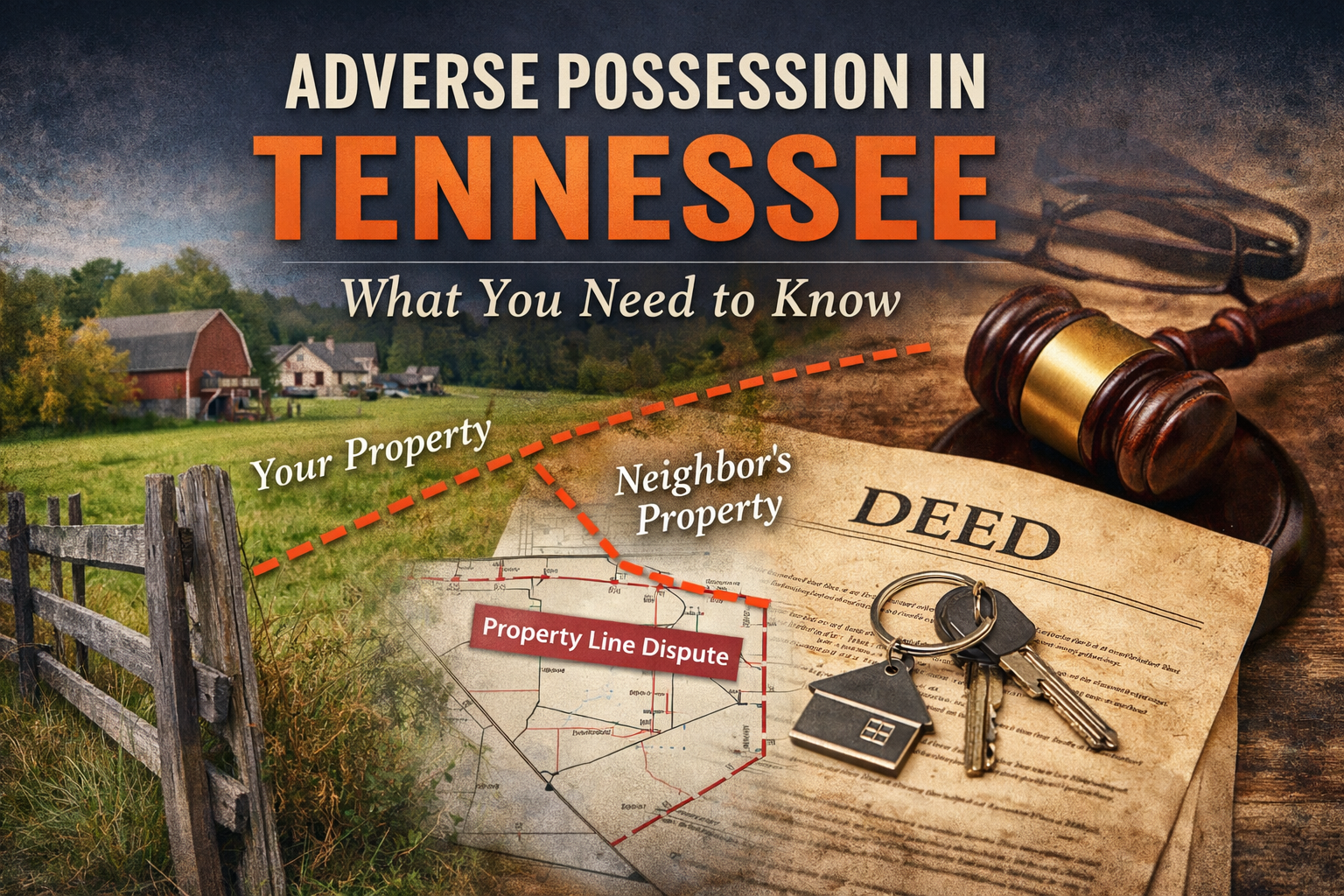
Property ownership is one of the most important legal rights a person can hold. But what happens when someone uses land that technically belongs to someone else — and does so for years?
Under certain circumstances, Tennessee law allows a person to claim ownership of property through a legal doctrine known as adverse possession.
Adverse possession cases are complex, fact-specific, and often contentious. Whether you are concerned about protecting your land from a claim or believe you may have acquired rights through long-term use, understanding how Tennessee law applies is essential.
This guide explains what adverse possession is, how it works in Tennessee, and what property owners need to know.
What Is Adverse Possession?
Adverse possession is a legal principle that allows someone to obtain ownership of property if they occupy and use it for a specific period of time under certain legal conditions.
At first glance, it may sound surprising — or even unfair. But the doctrine exists to promote clarity in land ownership and encourage landowners to monitor and protect their property rights.
Adverse possession does not happen automatically. The person claiming ownership must meet strict legal requirements.
The Legal Requirements for Adverse Possession in Tennessee
In Tennessee, a person claiming adverse possession must generally prove that their possession was:
1️⃣ Open and Notorious
The use of the property must be visible and obvious — not secret. The true owner must have had the opportunity to notice the occupation.
For example:
Building a fence
Constructing a shed
Farming the land
Maintaining and landscaping the area
Hidden or occasional use is typically not sufficient.
2️⃣ Actual Possession
The claimant must physically use the land in a manner consistent with ownership.
This could include:
Living on the property
Cultivating crops
Building improvements
Using it exclusively as part of their yard
Simply claiming ownership without using the land is not enough.
3️⃣ Exclusive
The possession must not be shared with the true owner or the public. The claimant must treat the property as their own.
If both parties use the land freely, exclusivity may be difficult to prove.
4️⃣ Continuous
The occupation must continue for the required statutory period without significant interruption.
Temporary or sporadic use typically does not qualify.
5️⃣ Hostile (Without Permission)
“Hostile” does not mean aggressive. It means the use is without the true owner’s permission.
If the owner allowed the use — for example, verbally granting permission to use part of the property — adverse possession generally cannot be established.
Common Adverse Possession Scenarios in Tennessee
Adverse possession claims often arise in:
Boundary disputes between neighbors
Fence line discrepancies
Encroachments involving driveways or structures
Rural land use disagreements
Inherited property conflicts
In fast-growing communities like Franklin and Brentwood, survey discrepancies and development can bring long-standing occupation issues to light.
What may have seemed like a minor fence placement decades ago can evolve into a serious ownership dispute.
How Do Courts Evaluate Adverse Possession Claims?
Courts closely analyze:
Historical property records
Surveys and plats
Testimony regarding land use
Tax payments
Improvements made to the property
Whether the true owner objected
Because adverse possession effectively transfers ownership, courts require strong evidence before granting such claims.
These cases are rarely simple.
How Property Owners Can Protect Themselves
If you own property in Tennessee, proactive steps can reduce the risk of adverse possession claims:
✔ Conduct Surveys
Obtain an updated survey before purchasing property and when disputes arise.
✔ Monitor Your Property
Inspect boundary lines periodically — especially if you own vacant or rural land.
✔ Address Encroachments Early
If a neighbor builds over the property line, address it promptly. Delay can strengthen their claim.
✔ Put Permission in Writing
If you allow someone to use part of your property, document it clearly as permissive use.
✔ Record Agreements
Boundary line agreements and easements should be documented and recorded when appropriate.
Taking early action is almost always easier than litigating years later.
What If Someone Claims Part of Your Property?
If a neighbor claims ownership of a portion of your land:
Do not ignore the claim.
Avoid escalating conflict unnecessarily.
Gather documentation (deeds, surveys, communications).
Consult a real estate attorney promptly.
An attorney can assess:
Whether the statutory period has been met
Whether required elements are satisfied
Whether the claim is legally valid
You may need to pursue a quiet title action to resolve competing claims and clarify ownership.
What If You Believe You Have an Adverse Possession Claim?
If you have openly and continuously used property for years — believing it was yours — you may have legal rights worth evaluating.
An attorney can review:
How long the property has been used
Whether you have color of title
The nature of improvements made
Whether use was exclusive and without permission
If a valid claim exists, legal action may be required to formalize ownership.
The Role of Litigation in Adverse Possession Cases
Adverse possession disputes often lead to litigation.
A lawsuit may involve:
Filing a complaint to quiet title
Presenting survey evidence
Calling witnesses regarding historical use
Challenging or defending the claim
Because these disputes can significantly impact property value, development rights, and resale potential, strategic legal representation is critical.
If you are facing an ownership dispute, speaking with a real estate lawyer in middle Tennessee can help you evaluate your options and protect your rights.
FAQ
Can someone really take my land if I don’t use it?
Under certain conditions and after the required statutory period, yes — but strict legal standards apply.
Does paying property taxes matter?
Tax payments can be relevant evidence but are not always dispositive.
Does a fence automatically change ownership?
No. A fence alone does not legally transfer title.
Can adverse possession apply to commercial property?
Yes, the doctrine can apply to both residential and commercial property.